Bikadro
A marketplace connecting travelling photographers with local photography experiences.
- Role
- Product Designer
- Year
- 2026
- Status
- Live — bikadro.com
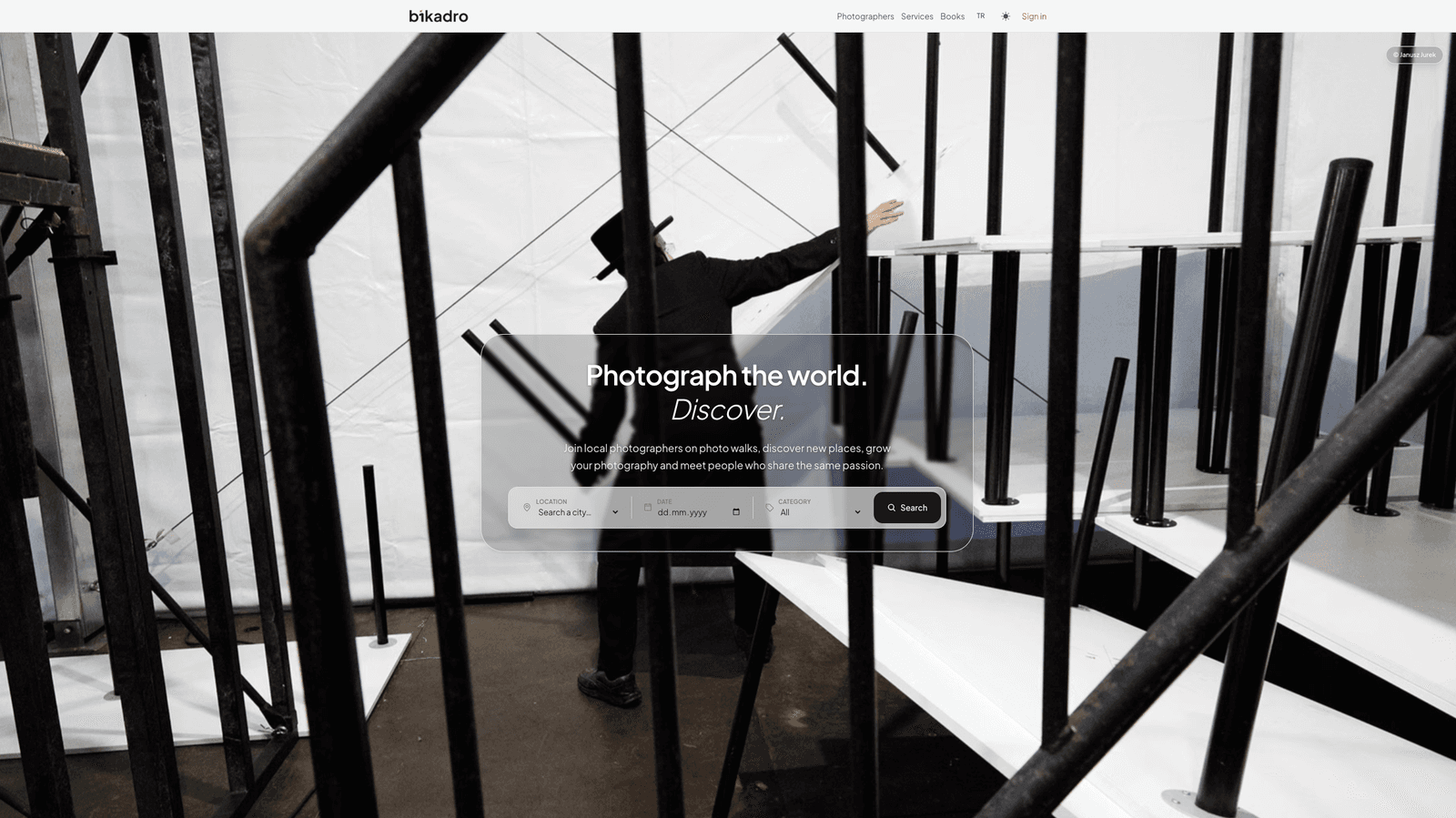
Bikadro is a marketplace designed to help photographers discover and connect with local photographers when visiting a new city.
Users can browse photographers by city, photography style or service, explore their portfolios and request a booking for a photo walk or workshop.
The platform focuses on discovery and booking requests, while payments and logistics are handled directly between photographers and customers.
As the Product Designer, I designed the product end-to-end, from user experience and interface design to the underlying product structure, including profiles, availability, booking flows, reviews, reporting and administrative tools.
01
Understanding the challenge
People aren't simply looking for a photography service.
They're looking for someone whose style they connect with.
The biggest risk was turning Bikadro into a directory full of listings instead of a platform that inspires people through photography.
Throughout the project I kept asking myself one question:
Does the interface showcase photographers, or does it compete with their work?
That question shaped almost every design decision.
02
Letting photography take the lead
Photography is the product.
The interface should never compete with it.
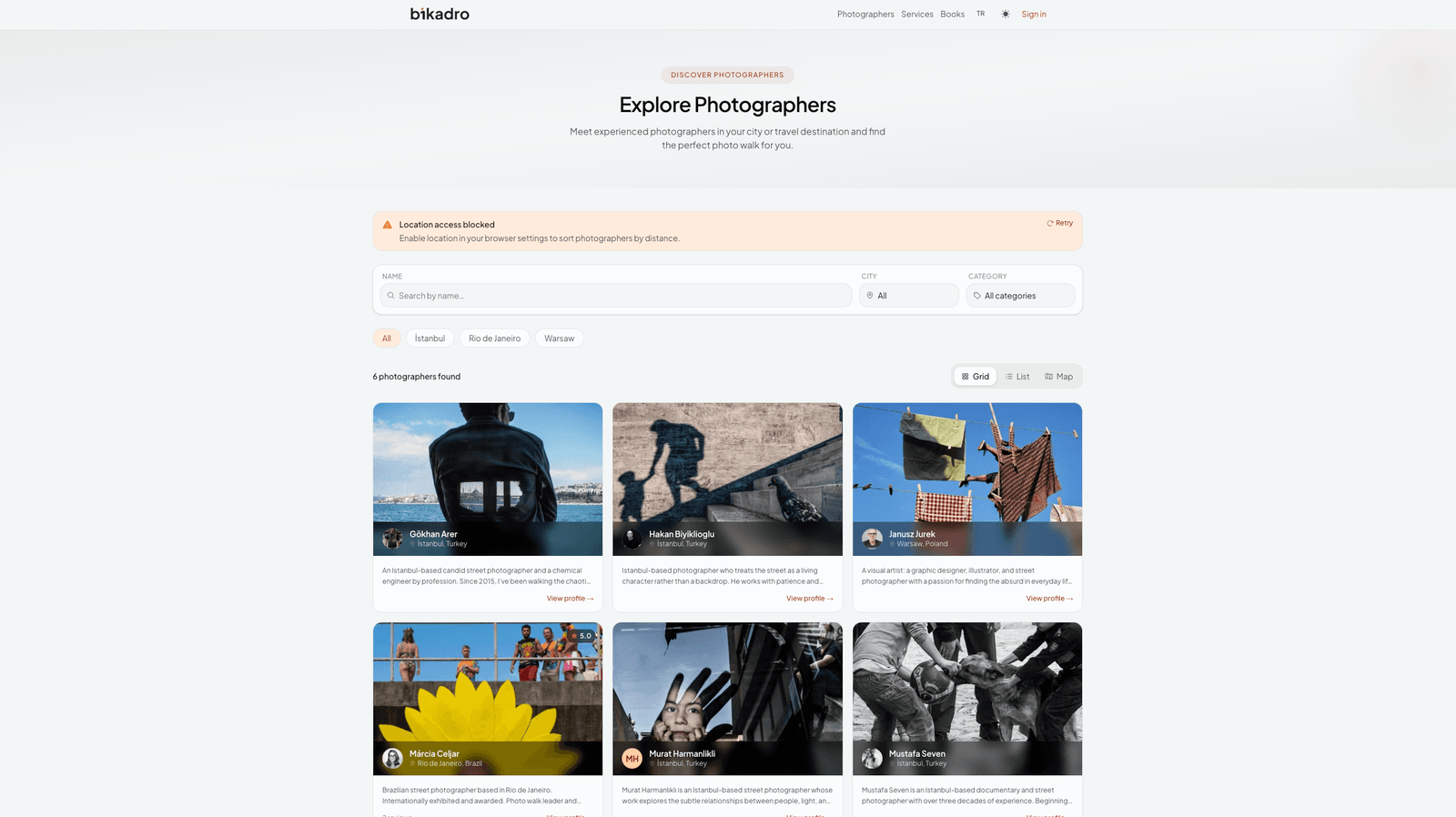
I intentionally kept the UI calm and minimal, using generous spacing and reducing unnecessary visual noise so that the photographs became the primary focus.
The goal wasn't to design a visually loud marketplace, but one that quietly lets creative work speak for itself.
03
Designing for exploration
People discover photographers in different ways.
Some search by city.
Others browse by photography style.
Some prefer a map, while others feel more comfortable scanning a list.
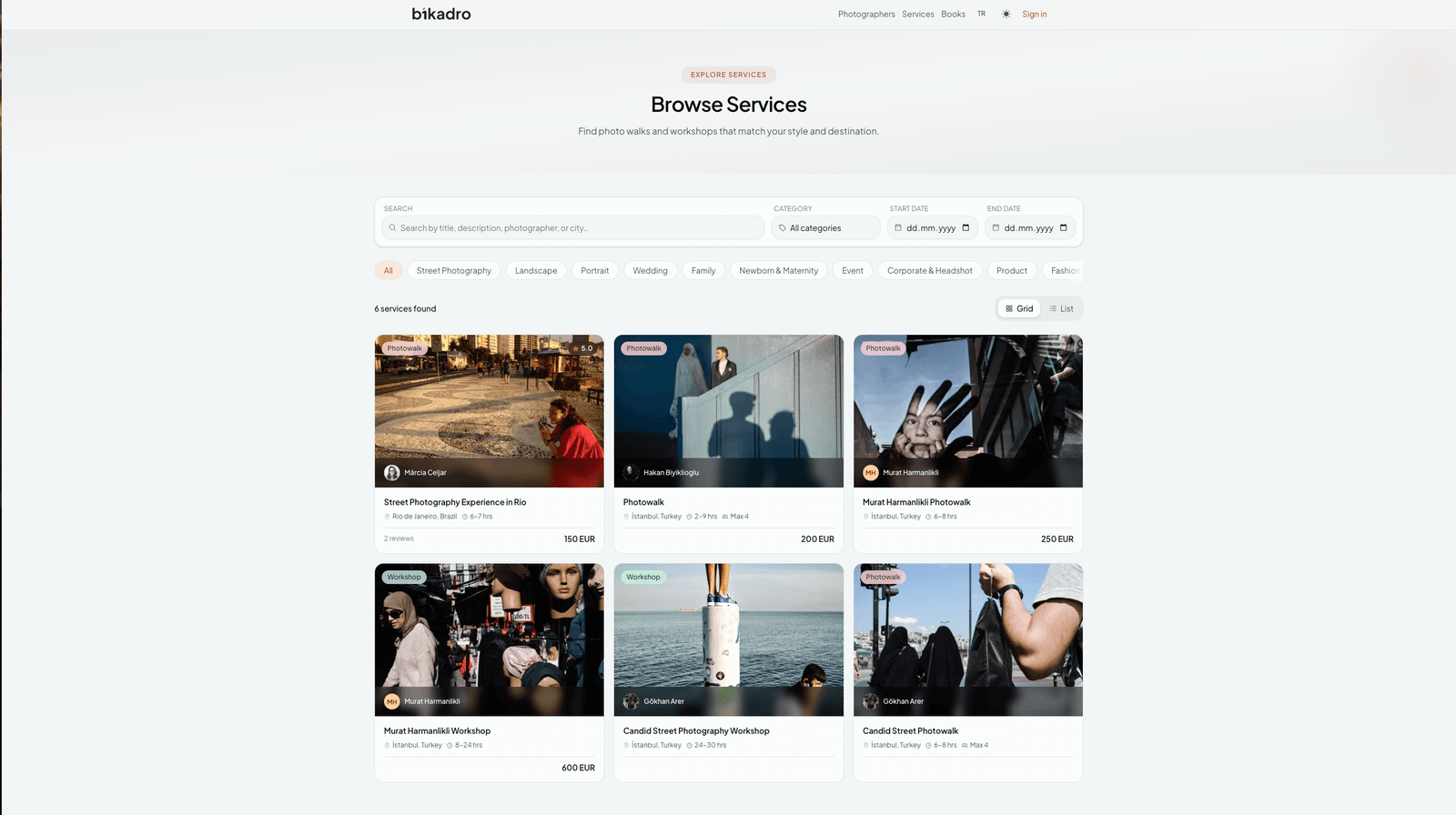
Instead of prioritising a single browsing pattern, I designed grid, list and map views as equally valuable ways to explore the platform.
Popular cities and photography categories remain immediately accessible, making it easy to narrow the search without interrupting the browsing experience.
04
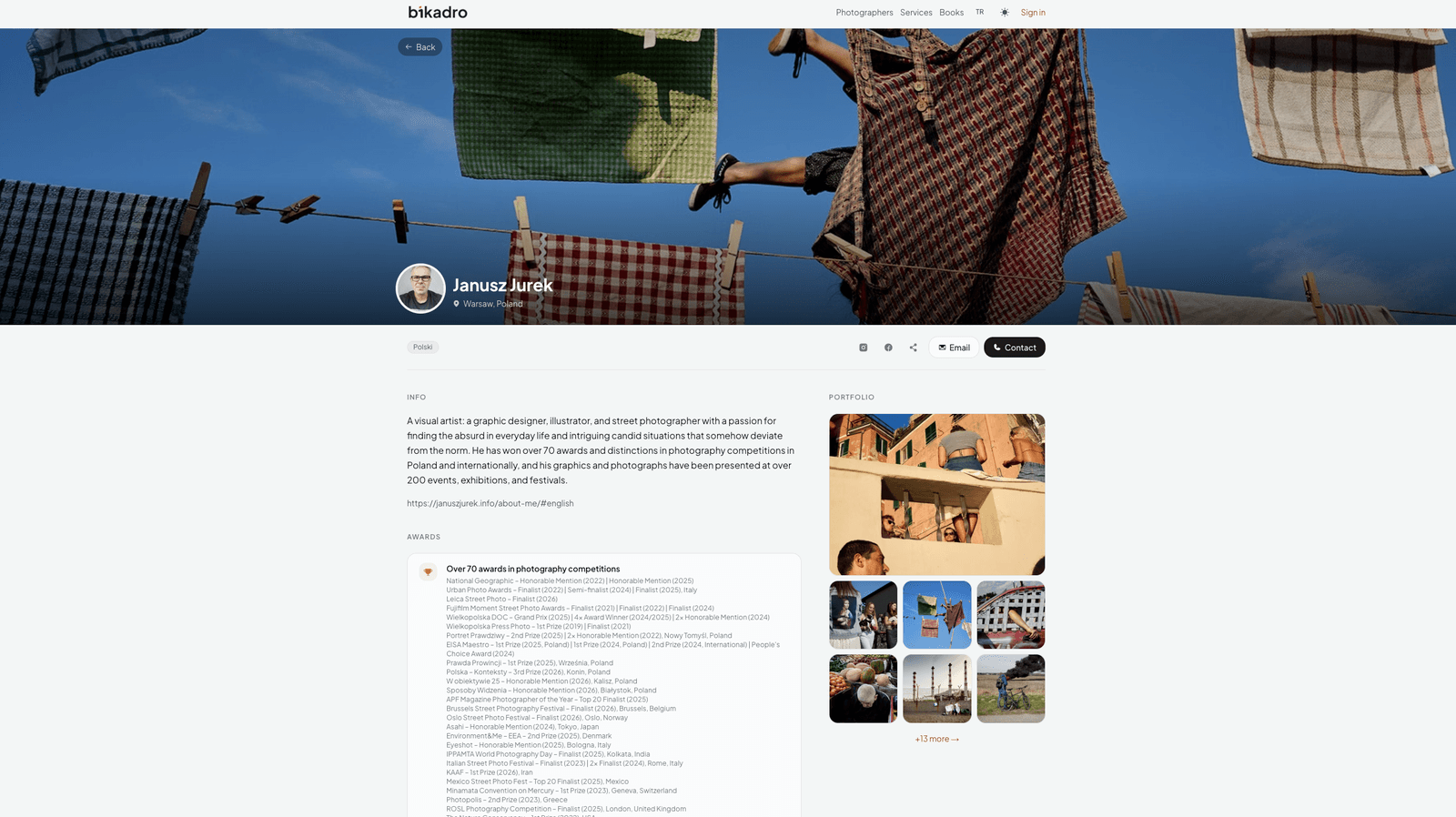
Building trust through profiles
A photographer's profile is more than a portfolio.
It's where people decide whether they feel confident booking a session.
The profile brings together everything a visitor needs before making that decision, including portfolio work, services, awards, availability and reviews.
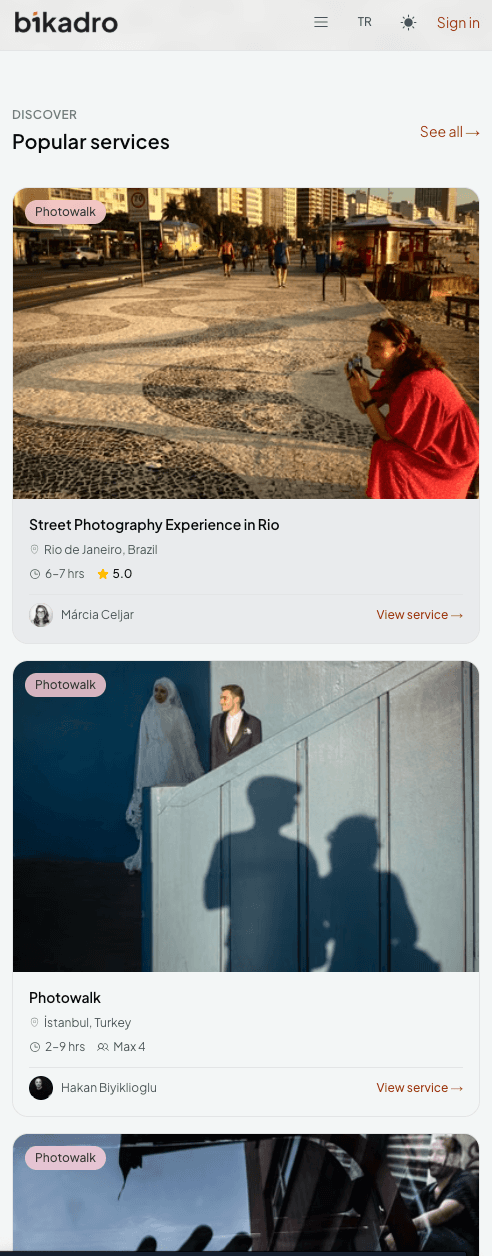
On mobile, I deliberately changed the content hierarchy so users learn about the photographer before scrolling through the portfolio, creating a more natural experience on smaller screens.
05
Keeping booking simple
Bikadro doesn't process payments.
Instead, it helps photographers and customers connect and organise a booking request.
That decision influenced the booking experience itself.
Availability is managed through working hours, blocked dates and multi-day validation for workshops, helping prevent scheduling conflicts while keeping the process straightforward for both sides.
06
Consistency through small decisions
One design decision that had a surprisingly large impact involved something very simple: buttons.
Early in the project, a few primary actions used the brand colour.
Over time, I realised they distracted from the photography itself.
I replaced every filled button with neutral black or white variants, creating a calmer and more consistent visual language across the product.
Sometimes the strongest design decisions aren't the biggest ones — they're the ones users barely notice.
07
Outcome
For me, Bikadro wasn't just about designing another marketplace.
It was about creating a platform where photography remains the centre of the experience while the interface quietly supports discovery, trust and communication.
Every design decision served the same purpose:
Let the work stand out, not the interface.
08
What I learned
Designing Bikadro reinforced an important lesson:
A marketplace isn't only about helping people find something.
It's about helping them feel confident enough to make a decision.
In visually driven products, good design often means stepping back and allowing the content to become the hero.
Next
GetchReplacing spreadsheets and WhatsApp with a single QR code.
More about my design philosophy →