İkam
A replacement vehicle management platform that helps dealerships and head office teams work together more efficiently.
- Role
- UI/UX Designer
- Year
- 2024
- Status
- Internal CRM
IKAM is an enterprise platform used within Renault to manage the complete replacement vehicle allocation process.
From creating a request to vehicle assignment, delivery, return and case closure, the entire operation is managed within a single system.
I was responsible for the overall product experience, including the information architecture, user flows, interface design and design system.
Rather than simply designing screens, my goal was to build a product that helps multiple teams collaborate around the same operational process.
I designed the product from scratch.
01
Understanding the challenge
IKAM isn't designed for a single user.
Dealerships, head office teams, administrators and operations staff all work on the same case.
The challenge wasn't a lack of information.
The challenge was making the right information visible to the right people at the right time.
Users often had to call each other just to understand the current status of a request, while notes and updates were scattered across different channels.
My goal wasn't to change the workflow.
It was to make the workflow easier to understand.
02
Turning a case into a workspace
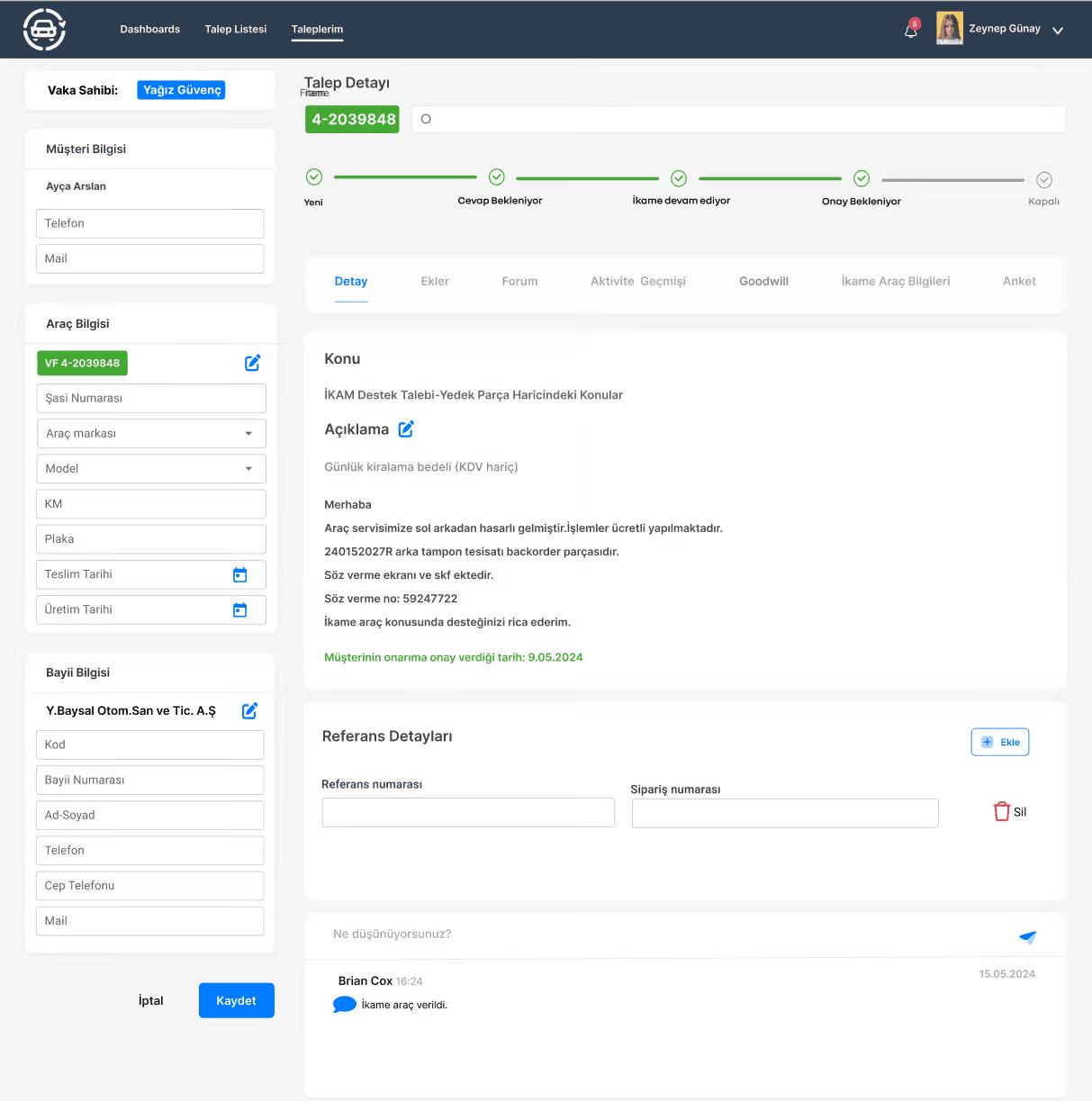
The most frequently used screen was the case detail page.
However, important information was buried inside a dense interface, making it difficult for users to understand the current state of a request.
I redesigned the page as a workspace rather than a traditional form.
The current stage of the case is always visible.
Users can move between modules without losing context.
Status, notes and frequently used actions are prioritised so the most important information is always within reach.
Instead of searching for information, users can focus on managing the process.
03
One case, multiple workflows
A single case includes much more than vehicle allocation.
Documents, internal communication, vehicle details, goodwill requests, activity history and customer feedback all belong to the same operational journey.
I redesigned these modules under a shared design system, creating a consistent experience across the entire product.
Users don't need to learn different interaction patterns as they move between features.
The product behaves consistently from end to end.
04
Simplifying request creation
While reviewing the existing process, I noticed users repeatedly entered information the system already knew.
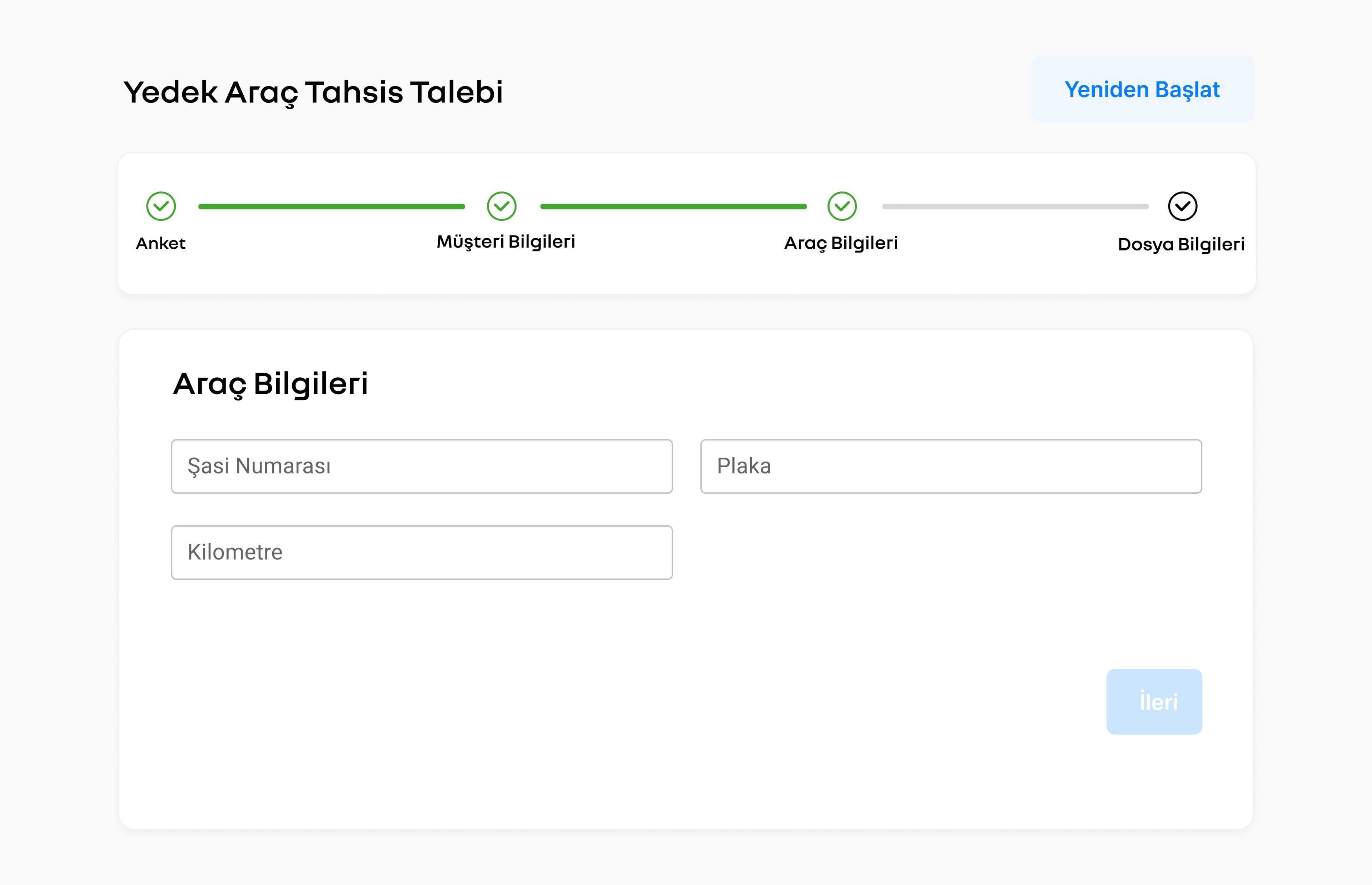
I redesigned the request flow into a clear step-by-step experience.
Once the vehicle VIN is entered, the system automatically fills in the relevant vehicle information.
This reduces manual work, speeds up the process and helps prevent data-entry errors.
Users only need to provide information that truly requires their input.
05
Making operations more visible
In enterprise software, the biggest challenge is often visibility rather than functionality.
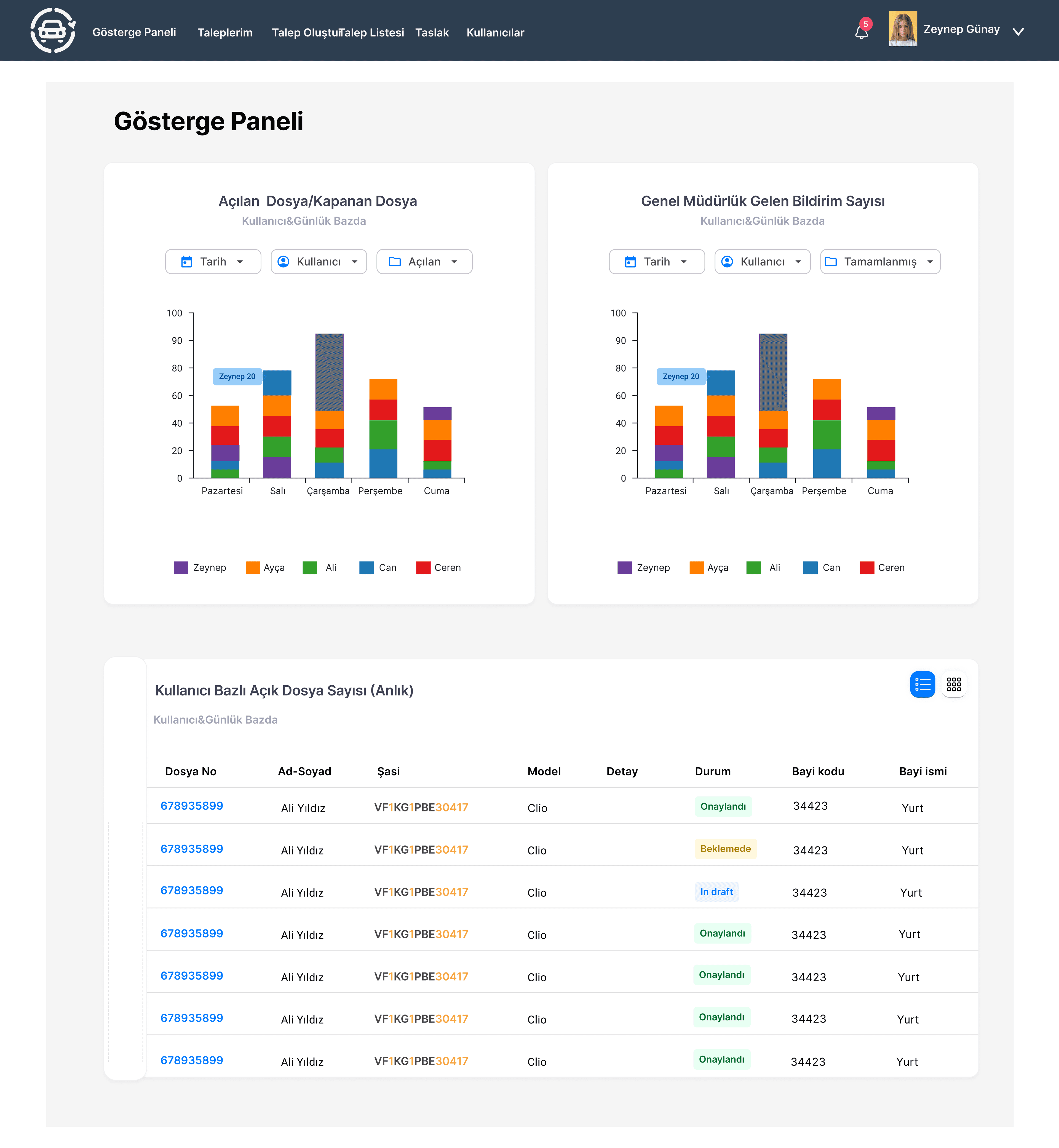
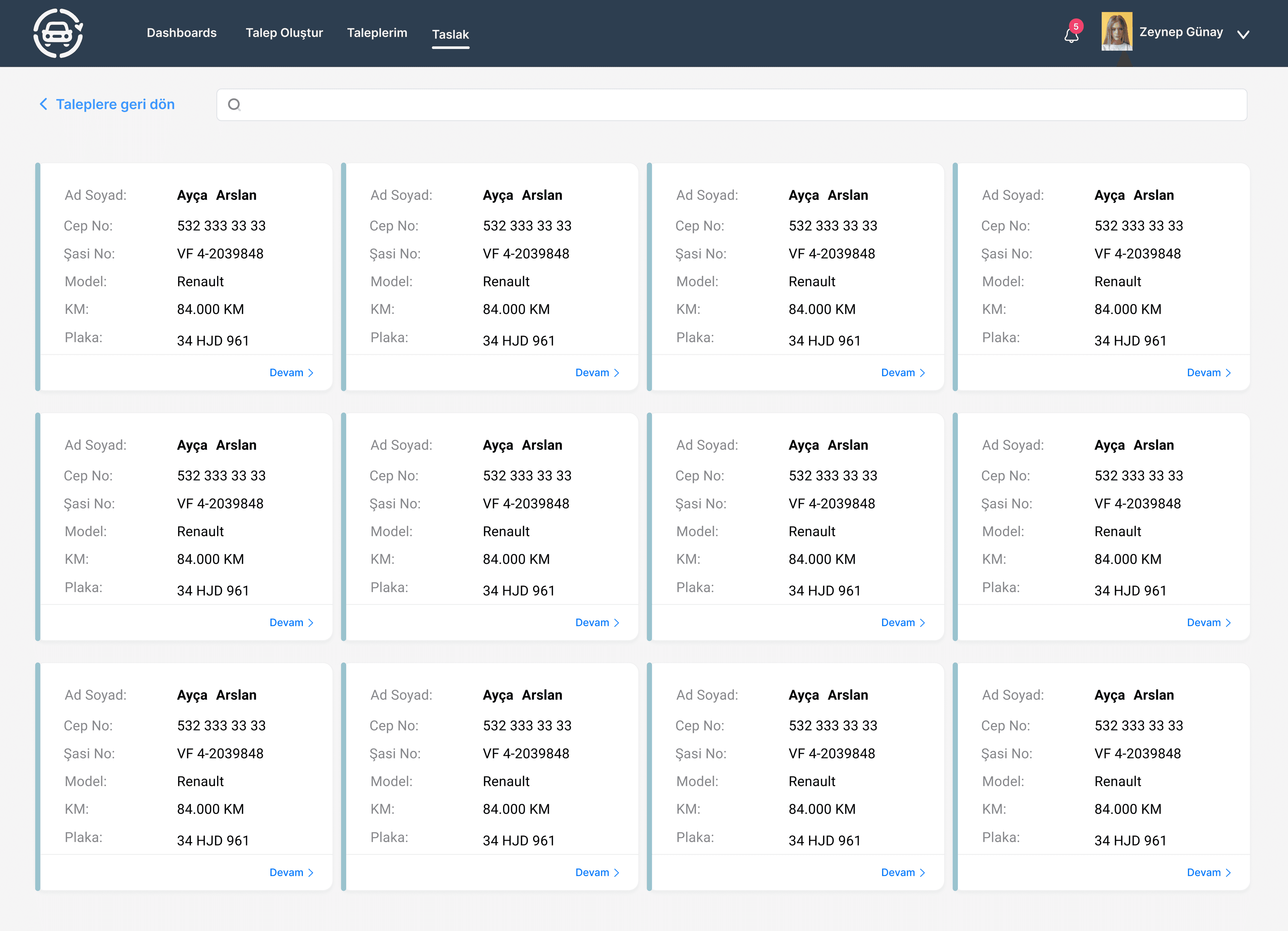
I redesigned draft requests, reference records and operational queues to make priorities and ownership immediately clear.
Users can quickly understand which requests are waiting, in progress or completed without searching through multiple screens.
As a result, collaboration becomes smoother and operational work is easier to manage.
06
Outcome
For me, IKAM was much more than a CRM project.
It was an opportunity to design a complex enterprise product from the ground up.
Every design decision focused on one goal:
Helping multiple teams collaborate through a workflow that feels clear, structured and easy to follow.
07
What I learned
This project taught me that successful enterprise products are not defined by the number of features they offer.
They're defined by how easily people can understand and navigate complex operations.
Sometimes the most valuable design decision isn't creating another screen — it's eliminating the need for people to ask each other where a process stands.
Next
Designing for AccessibilityBuilding scalable accessibility standards for Renault's authorised dealership websites.
More about my design philosophy →