Mais Port
An enterprise platform designed to simplify daily operations for Renault MAIS sales and after-sales teams.
- Role
- UI/UX Designer
- Year
- 2024–2025
- Status
- Internal enterprise platform
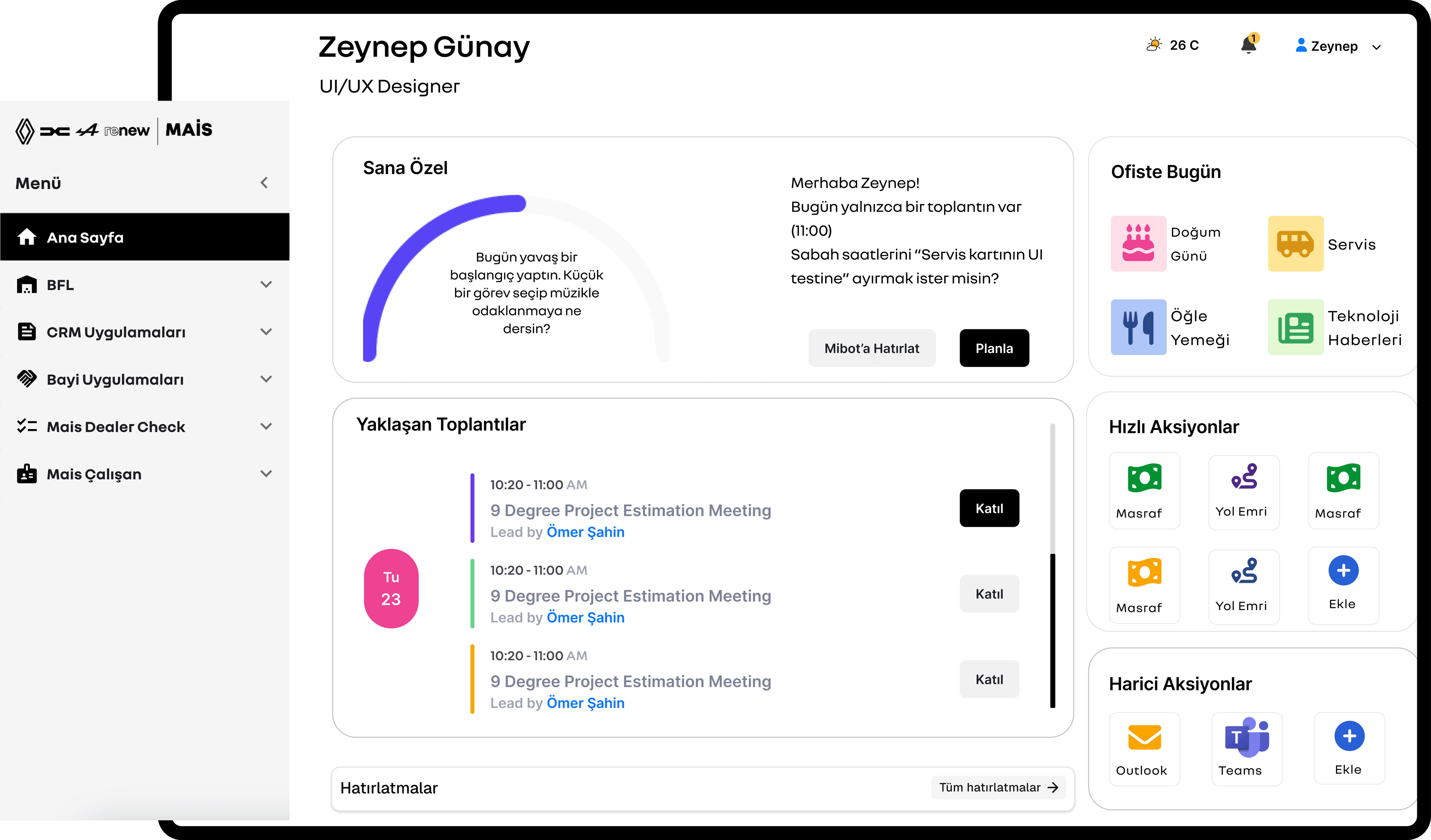
Mais Port is an internal operational platform built for Renault MAIS, bringing together the tools that sales and after-sales teams rely on every day.
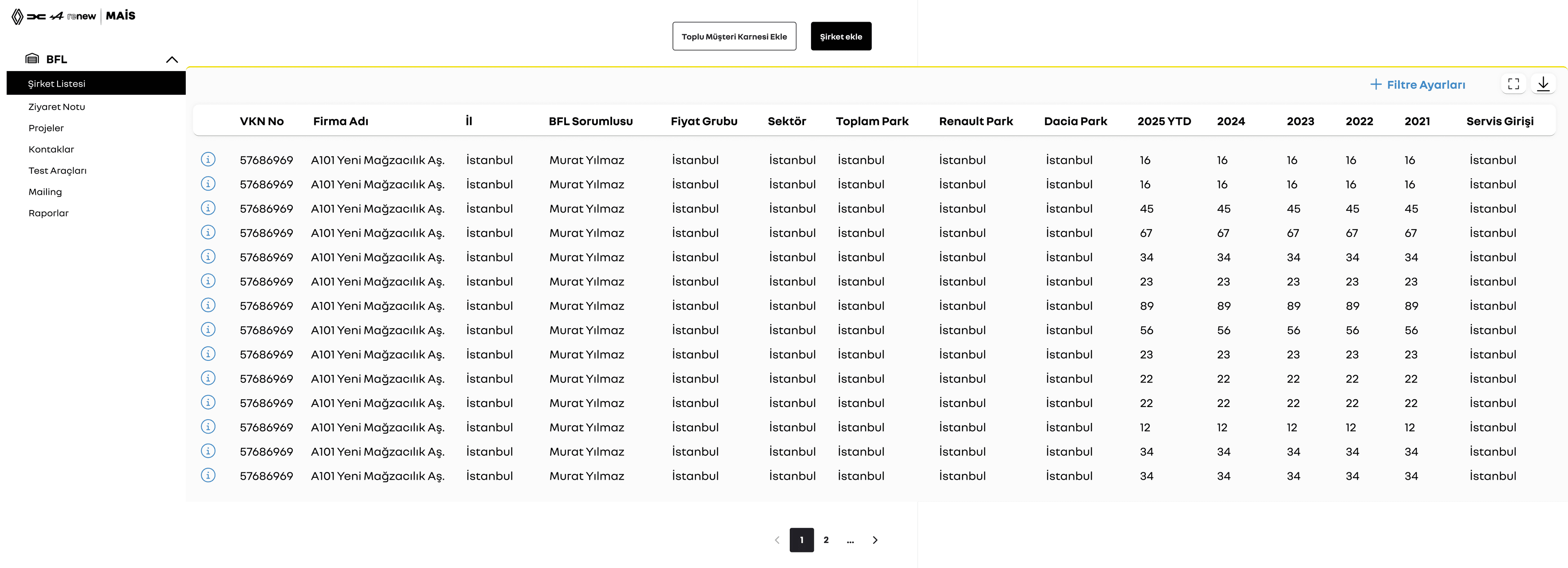
From company records and dealership visits to travel requests, vehicle configuration and expense management, the platform consolidates multiple operational workflows into a single, modular experience.
As the Product Designer on the project, I designed the platform end-to-end.
My goal wasn't simply to redesign individual screens. It was to turn a product that had grown organically over the years into a more consistent, intuitive and scalable experience.
01
Understanding the problem
Enterprise products naturally become more complex over time.
As new business needs emerge, new modules are added, different teams contribute new features, and the overall experience gradually becomes fragmented.
Mais Port had evolved in exactly that way.
Different interaction patterns, inconsistent tables, repetitive components and varying user experiences across modules made everyday tasks harder than they needed to be.
Rather than removing complexity altogether, my goal was to keep only the complexity that genuinely added value and simplify everything else.
02
Rethinking the dashboard
The dashboard is the first screen users see every morning.
Instead of treating it as a reporting page, I wanted it to become a workspace that helps users understand their day at a glance.
Upcoming meetings, active tasks and operational priorities are surfaced immediately, making it easier to decide what needs attention first.
The dashboard became more than a summary of information — it became the starting point for the workday.
03
Introducing AI where it actually helps
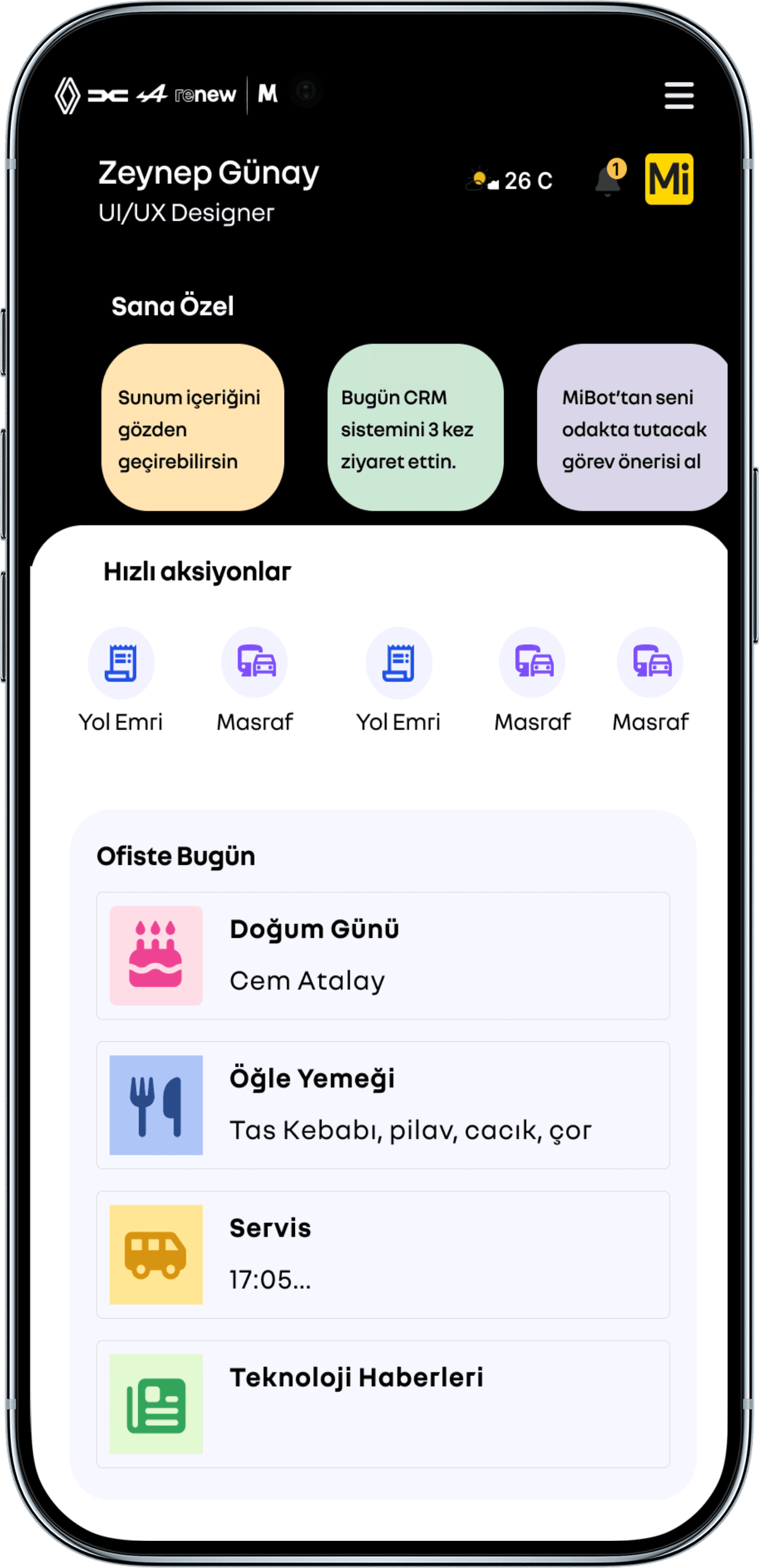
One of the most interesting parts of the project was exploring how AI could support daily work without becoming intrusive.
Rather than adding AI features for the sake of novelty, I focused on moments where small interventions could genuinely improve the experience.
The platform provides contextual suggestions based on the user's schedule, proactive reminders for upcoming tasks, quick one-tap actions and lightweight motivational feedback throughout the day.
The same assistant experience also appears in the mobile application under the "For You" section, creating a consistent experience across desktop and mobile.
04
Simplifying vehicle configuration
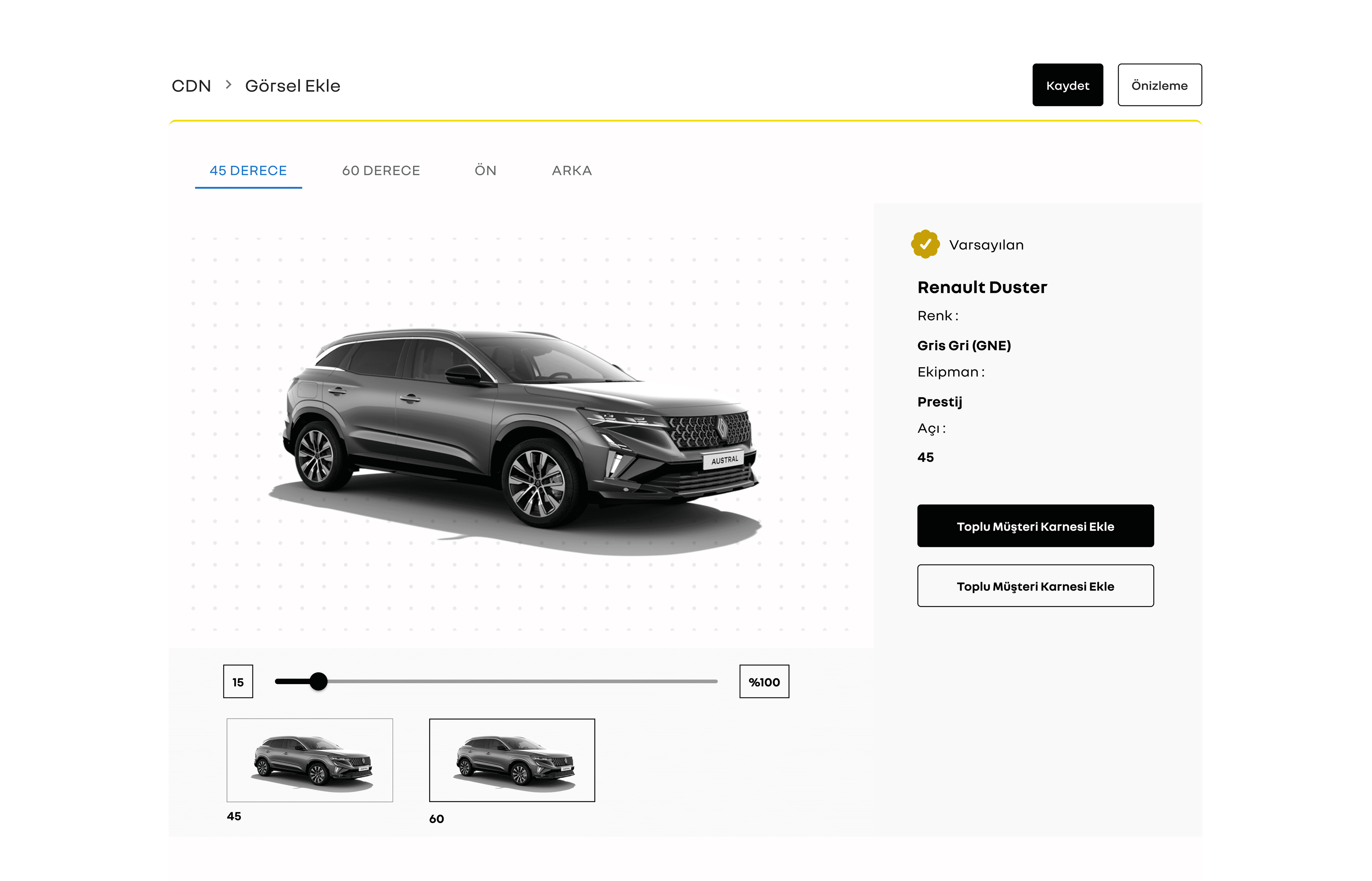
Vehicle configuration is one of the most frequently used tools within the platform.
The existing workflow exposed far more information than users actually needed during conversations with customers.
I redesigned the experience around only three essential decisions:
- Model
- Trim
- Colour
This allows sales consultants to reach the correct vehicle visual in seconds instead of navigating unnecessary filters and metadata.
06
Designing for field teams
A significant part of the platform is used outside the office.
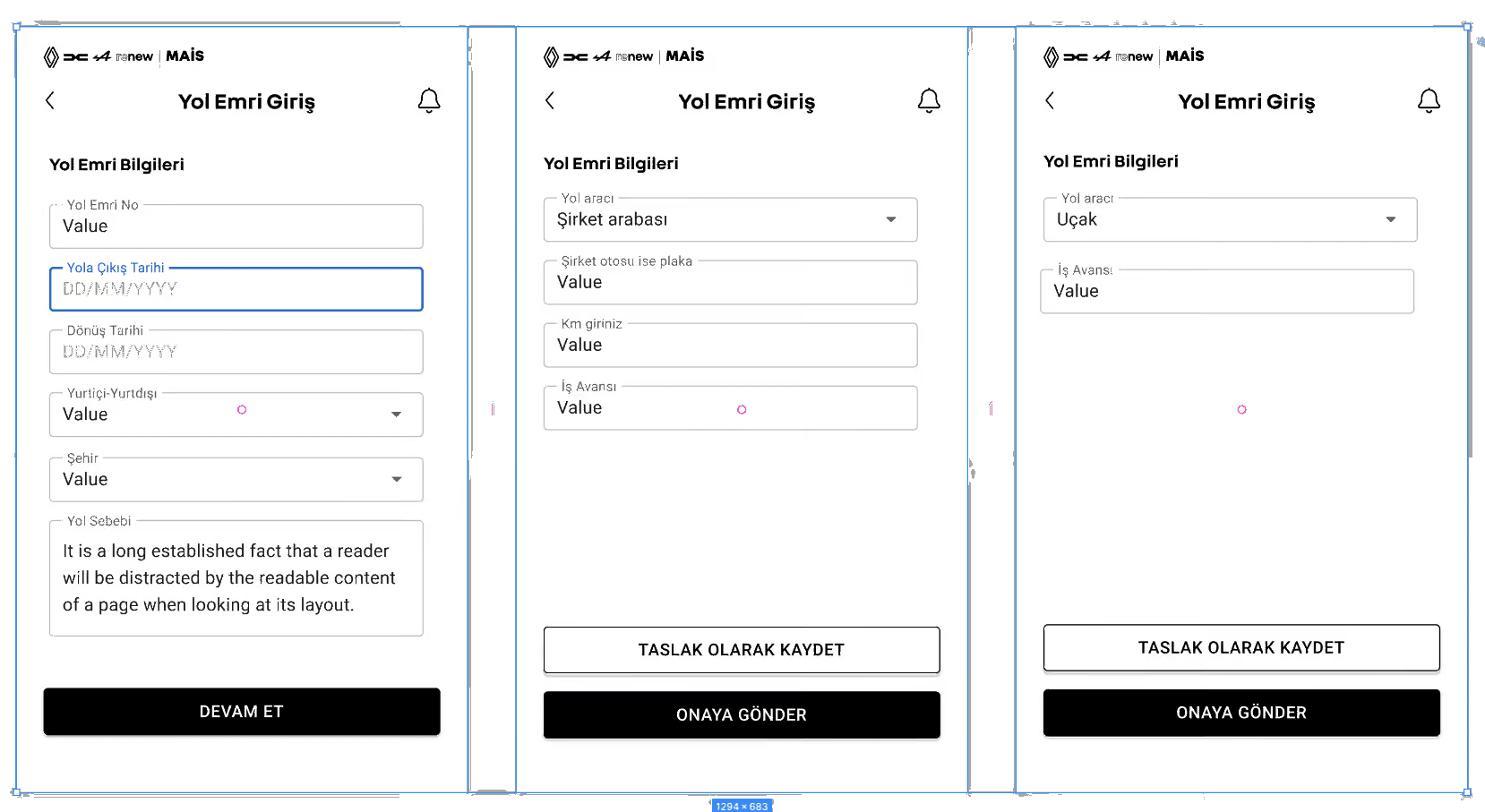
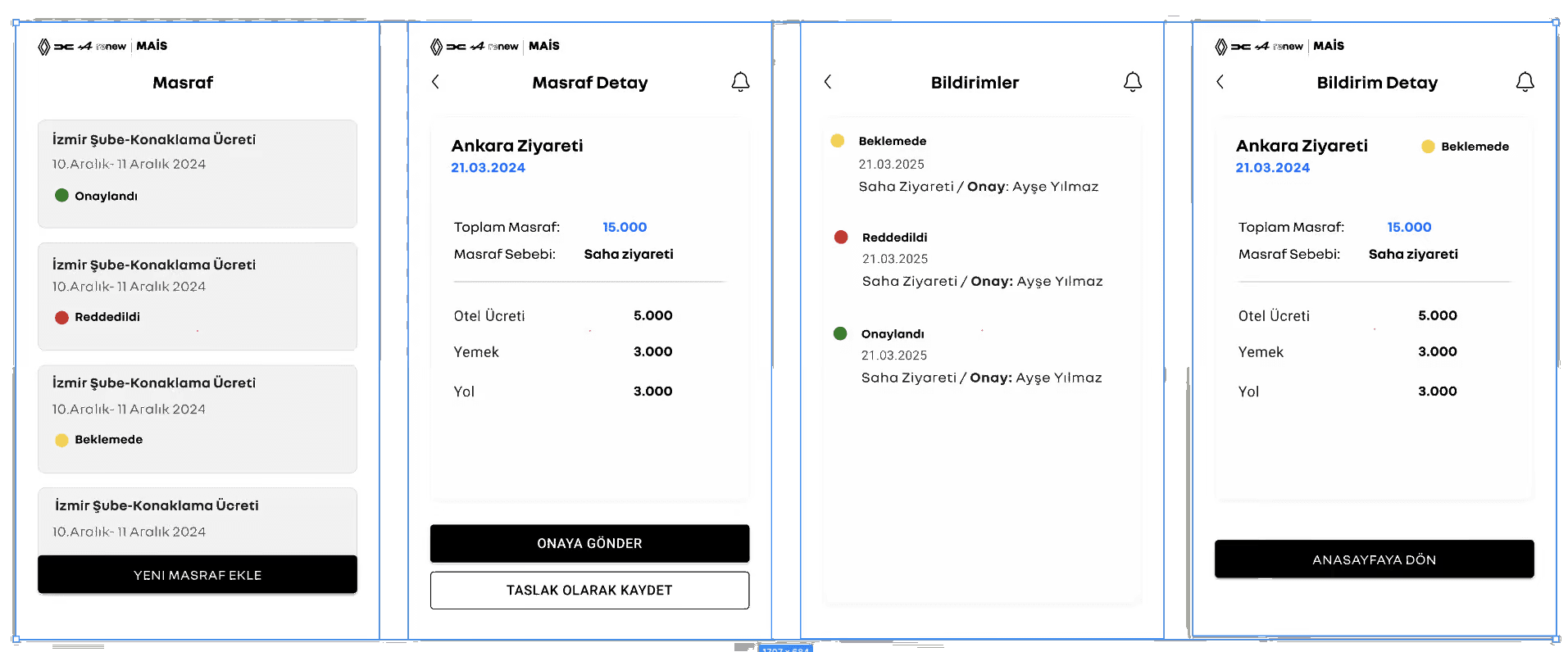
For workflows such as Travel Authorisation and field operations, I prioritised mobile usability alongside desktop.
Forms were simplified by removing unnecessary inputs, while vehicle, route, date and approval flows were reorganised into clearer step-by-step experiences.
Responsive layouts ensured that the same workflows could be completed comfortably on mobile devices.
07
Making operational work more visible
Operational work often disappears across multiple modules.
To address this, I introduced a lightweight AI-assisted task layer that transforms notes and operational events into actionable to-dos.
Whether the task originates from Expenses, Work Orders, Dealerships or BFL, users receive suggested priorities and due dates, reducing the chance of important work getting lost across the system.
08
Outcome
For me, Mais Port was much more than designing a large enterprise platform.
It was about bringing consistency to a product that had evolved over many years, simplifying complex operational workflows and creating a shared experience across dozens of interconnected modules.
Throughout the project, my focus remained the same: helping users spend less time understanding the interface and more time completing their work.
09
What I learned
Designing enterprise software taught me that good design isn't always about introducing new features.
Sometimes the biggest impact comes from organising complexity, creating consistency and making everyday work feel more effortless.
A successful enterprise product isn't defined by how many features it offers, but by how confidently people can use it every single day.
Next
Port WalletDesigning a safer, clearer digital wallet experience
More about my design philosophy →